
May 21, 2026
If you want to rely less on your car in Silicon Valley, Mountain View deserves a close look. Many buyers and renters hope for an easier commute, more walkable daily errands, and housing near transit, but not every city supports that lifestyle equally well. In Mountain View, the mix of rail service, local shuttles, walkable pockets, and newer multifamily housing makes a car-light life realistic in the right areas. Let’s dive in.
The most accurate way to describe Mountain View is car-light, not fully car-free. You can reduce daily driving if you choose a home near the city’s main transit spine and feel comfortable mixing trains, shuttles, biking, and walking.
That distinction matters. In some parts of the city, a car may still be useful for certain errands, evening trips, or destinations outside the transit network. But in the strongest transit-connected pockets, many households can handle commuting and day-to-day needs with fewer car trips.
Mountain View has been planning around better connectivity and fewer single-occupancy vehicle trips. City mobility goals include improving connections, creating green corridors, and supporting a transportation network that gives residents more options.
At the center of that network is the Downtown Transit Center. According to the City, it is the core multimodal hub for Caltrain, VTA light rail, buses, and shuttles, and it handles more than 12,000 boardings and alightings on a typical weekday.
That level of activity matters if you are deciding where to live. A home with practical access to the Transit Center can make commuting and daily movement much easier without needing to drive everywhere.
Mountain View has two Caltrain stations: Mountain View and San Antonio. Caltrain lists both stations as wheelchair accessible, and the Mountain View station also connects with VTA Orange Line service.
Caltrain’s corridor runs between San Francisco, Palo Alto, San Jose, and Gilroy. For buyers who work along that line or need regional access, this gives Mountain View a strong foundation for a lower-car lifestyle.
One reason Mountain View stands out is that the rail system is not the whole story. The free Mountain View Community Shuttle serves 50 stops across town on weekdays and weekends.
The free MVgo shuttle network adds another layer, connecting the Transit Center to North Bayshore, East Whisman, San Antonio, and downtown Mountain View during commute hours. For many residents, these connections help solve the last-mile problem that often makes transit harder to use.
The city has also invested in station-access and corridor planning. Projects like the Transit Center Master Plan and Shoreline Boulevard corridor planning are aimed at improving multimodal connections between downtown, the Transit Center, and North Bayshore.
For you as a buyer, that means car-light living is supported not only by current service, but also by a broader city framework focused on better transit access over time.
Transit works best when the area around it is easy to navigate on foot or by bike. That is one reason Downtown Mountain View is such an important part of the conversation.
The City describes downtown as a mixed-use, walkable city center along Castro Street between Evelyn Avenue and El Camino Real. It includes restaurants, shopping, performing arts, transit access, and a pedestrian mall on the 100, 200, and 300 blocks of Castro Street.
If you want to do more of your daily routine without driving, that kind of environment helps. A walkable downtown can support shorter errands, easier station access, and a lifestyle that feels more convenient overall.
Mountain View also has accessible sidewalks, an expanding bike-lane network, and more than 10 miles of multi-use trails. The city highlights Stevens Creek Trail, Permanente Creek Trail, and Hetch Hetchy Trail as part of that system.
The Active Transportation Plan is intended to create a connected, low-stress network for reaching housing, jobs, schools, and other destinations. That is useful if you picture yourself biking to transit, riding to nearby shopping, or replacing short car trips with active transportation.
El Camino Real is a major multimodal corridor in Mountain View. The city describes it as linking shops, businesses, multi-family housing, trails, neighborhood streets, and transit.
Its Streetscape Plan calls for protected bikeways, intersection upgrades, and new crossings, with on-street parking removed in some sections to make room for bike facilities. Shoreline Boulevard planning also supports stronger transit, bicycle, and pedestrian connections between downtown and North Bayshore.
If your goal is to drive less, downtown Mountain View and the Transit Center area are the strongest place to start. This part of the city combines Caltrain, VTA light rail, shuttle access, and one of the most walkable street environments in Mountain View.
You also get direct access to Castro Street’s mixed-use core. That combination makes this area especially appealing for buyers who want commute flexibility and more daily convenience on foot.
The San Antonio area is another strong fit for car-light living. The General Plan describes it as a diverse commercial and residential area where nearly half the area is multi-family, including transit-oriented development around the San Antonio Caltrain Station.
VTA bus service also supports the area, and the city’s vision is for San Antonio to be a transit-oriented, highly accessible, cohesive mixed-use district. If you want housing tied closely to transit-oriented planning, this area deserves attention.
Selected parts of El Camino Real, Middlefield, and nearby infill areas also fit the car-light profile. These locations often overlap with newer multifamily housing, bike improvements, and access to transit or shuttle routes.
They may not feel as immediately walkable as downtown’s core blocks, but they can still work well if your priority is combining housing choice with practical access to rail, buses, and local connections.
North Bayshore is important, but it is best understood as a longer-term story. The approved master plan allows for up to 7,000 residential units along with parks, retail, and bike and pedestrian improvements.
That makes it notable as a future mixed-use district. For today’s buyers, though, it is more useful to view North Bayshore as an evolving area rather than the city’s most established walkable neighborhood.
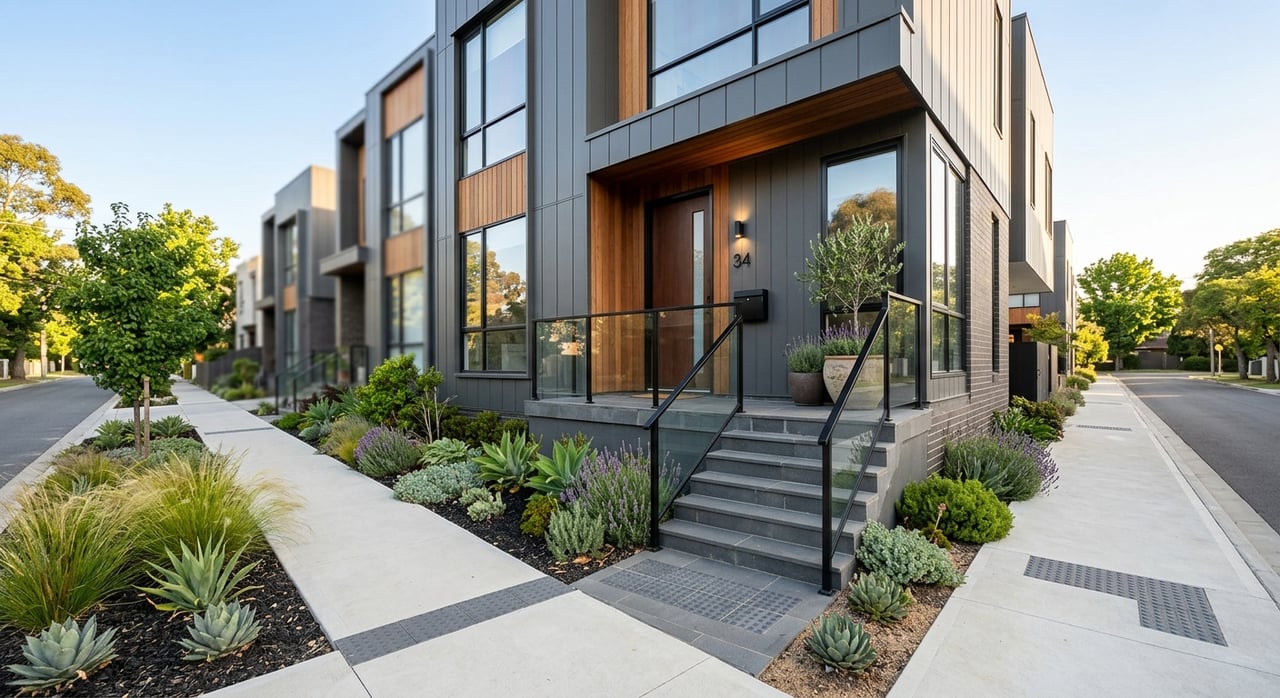
Near Mountain View’s transit spine, the housing pattern is mostly multifamily and mixed-use development, not detached single-family homes. That is one of the clearest themes in the city’s current and recent development pipeline.
Examples include 120 rental units at City Lot 12 downtown, 140 condominiums at 881 Castro, 299 apartments at 749 W. El Camino Real, 143 units at 57-67 E. Evelyn, and 330 apartments at San Antonio Village Center Phase I. These projects show where housing and transit-oriented living are most often overlapping.
The broader infill pipeline reinforces that pattern. It includes 97 condominium units and 323 apartment units at 555 W. Middlefield Road, plus attached housing formats such as 37 units at 660 Tyrella Avenue, 75 attached rowhomes at 2296 Mora Drive, and 198 rowhouses at Ferguson Drive.
If you want a car-light location in Mountain View, you are more likely to find the right fit in a condo, apartment, townhome-style, or rowhome setting than in a detached house right next to the station core. That does not mean detached homes do not exist in Mountain View. It means the housing closest to transit tends to follow a different pattern.
For many buyers, that tradeoff can make sense. You may give up lot size or a traditional single-family layout, but gain easier access to commuting options and a more connected daily routine.
A car-light setup can work well if your routine aligns with Mountain View’s transit network. That often includes people commuting along the Caltrain corridor, professionals with access to shuttle-connected job centers, and buyers who value walkable errands and shorter local trips.
It can also be a practical option if you want to own fewer cars as a household. In the right location, being close to the Transit Center or one of the station areas can make that choice much easier.
Still, the lifestyle works best when your expectations are realistic. Mountain View offers strong car-light potential, but the experience is most seamless when you choose a home with access to the city’s transit, shuttle, walking, and bike network from day one.
Before choosing a home for a car-light lifestyle, focus on the details that affect your day-to-day routine.
Consider:
A home can look close to transit on a map but feel very different in real life. The best choice usually comes from matching the property to your actual schedule, commute, and comfort level with walking or biking.
Mountain View offers one of the stronger car-light setups in Santa Clara County, especially around downtown, the Transit Center, San Antonio, and selected corridor infill areas. The city’s transit network, free shuttles, walkable downtown core, and expanding bike infrastructure create real opportunities to rely less on a car.
The housing that supports that lifestyle is usually multifamily or attached housing, often in mixed-use or transit-oriented settings. If that matches your goals, Mountain View gives you more practical options than many buyers expect.
If you are weighing neighborhoods, condo options, or transit-oriented housing in Mountain View, working with a local advisor can help you compare what looks good on paper with what will actually support your daily routine. When you are ready, reach out to Tony Ngai for a free neighborhood market report and home valuation.
Stay up to date on the latest real estate trends.

Real Estate
Wait or buy?
Get in Touch to Schedule a Consultation