
June 4, 2026
If you work in the South Bay, Fremont can look like the obvious compromise: a little more space, a little more breathing room, and maybe a lower price tag. But once you compare actual housing costs, commute times, and housing types, the answer gets more nuanced. This guide breaks down where Fremont fits, where South Bay cities still win, and how to decide which tradeoff matters most for your daily life. Let’s dive in.
Fremont often lands in a useful middle ground, but it is not always the budget option buyers assume. In April 2026, Fremont’s median listing price was $1.349 million, compared with $1.27 million in San Jose, $1.499 million in Santa Clara, about $1.5 million in Sunnyvale, $1.728 million in Mountain View, and $2.988 million in Cupertino.
That means Fremont is less expensive than much of the premium South Bay, but not automatically cheaper than San Jose. If you are comparing only by city name, you can miss the fact that Fremont sits more in the middle of the pack than at the discount end.
Price per square foot tells a similar story. Fremont came in at $834 per square foot, versus $805 in San Jose, $900 in Santa Clara, about $1,078 in Mountain View, and $1,377 in Cupertino. For buyers who care about value, Fremont can make sense, but it works better as a different product choice than a simple bargain play.
If you are weighing rent before buying, Fremont looks more competitive. Median rent was $2,797 per month in Fremont, compared with $3,067 in San Jose, $3,155 in Sunnyvale, $3,590 in Santa Clara, $3,994 in Mountain View, and $3,939 in Cupertino.
That gap can matter if you are trying to manage monthly costs while staying within reach of South Bay job centers. Even when home prices are fairly close, Fremont can still offer a lower monthly housing cost on the rental side.
One of the biggest differences between Fremont and the South Bay is not just price. It is the kind of housing you are more likely to find.
Fremont’s housing stock in 2020 was 57.8% single-family detached and 13.2% single-family attached. San Jose was 52.5% detached, 9.7% attached, and 27.5% multifamily with five or more units.
Sunnyvale and Mountain View skew even more toward multifamily housing. Sunnyvale was 36% detached, while Mountain View was 30% detached and had a much larger share of apartments and larger multifamily buildings.
In practical terms, Fremont reads more like a traditional suburban market. You are more likely to be choosing among detached homes and attached homes, while cities like Sunnyvale and Mountain View often offer a more condo, townhome, and apartment-oriented mix.
That does not make one better than the other. It simply means your lifestyle goals matter. If you want more of a suburban home base, Fremont may fit better. If you want to be closer to dense job centers and station-area living, the South Bay core may line up more naturally.
It is easy to talk about Fremont as if it were one housing market, but the internal spread is wide. Recent neighborhood median prices ranged from $689,000 in Centerville and $789,500 in Warm Springs to $998,888 in Central-Downtown Fremont.
At the higher end, Mission San Jose was $1.693 million, Niles was $1.718 million, and Glenmoor was $1.749 million. That range matters because your experience in Fremont depends heavily on the exact neighborhood you target.
If you are comparing Fremont to Santa Clara, Sunnyvale, or San Jose, citywide median prices only tell part of the story. In Fremont especially, you need to compare the neighborhood, housing type, and commute path together.
This is where a data-driven approach helps. A lower citywide number does not always mean a lower entry point for the kind of home you actually want.
For South Bay workers, this is the section that matters most. Fremont is not automatically the better commute choice just because it sits nearby on the map.
The Bay Area’s average commute time was 30 minutes in 2024. Fremont’s mean travel time to work was 30.3 minutes, while San Jose was 27.3 minutes, Santa Clara was 22.6 minutes, and Sunnyvale was 23.0 minutes.
That means many core South Bay cities actually offer shorter average commutes than Fremont. If your office is in Santa Clara, Sunnyvale, Mountain View, or Cupertino, Fremont may mean giving up commute efficiency even if you gain more space or a different housing mix.
Regional patterns help explain why. In 2024, 69% of Bay Area commuters drove to work, 8% used public transit, and 17% worked from home. Transit commutes averaged 50 minutes regionwide, compared with 29 minutes for people driving alone.
Alameda County had 18% of commuters working from home, and Santa Clara County draws commuters from Alameda County. For many Fremont buyers working in the South Bay, the reality is more cross-county driving and less direct convenience than living closer to the job corridor.
Fremont has meaningful transit options, including BART and ACE, with connections toward San Jose. That can work well for certain regional trips and for buyers who want East Bay access alongside South Bay reach.
But the South Bay core is more directly built around the Caltrain and VTA corridor. San Jose highlights Caltrain and VTA, Sunnyvale points to Caltrain and VTA, and Mountain View adds VTA bus and light rail, Caltrain, and shuttles.
The difference is less about whether transit exists and more about how directly it fits your daily pattern. Fremont works well as a regional East Bay base, while many South Bay cities are more embedded in the station-area network tied to major job centers.
So if your priority is the shortest and simplest transit path into Silicon Valley, South Bay core cities may have the edge. If your priority is a broader regional lifestyle with East Bay access, Fremont may still be very attractive.
Housing decisions are not just about cost and commute. They are also about what your day-to-day life feels like.
Fremont offers a more open-space-oriented setting. Central Park alone spans more than 450 acres and includes Lake Elizabeth, a trail loop, sports fields, and a dog park.
The city also features outdoor assets like Mission Peak and Alameda Creek Trail, plus a growing downtown area near the Fremont BART station. Fremont’s downtown district covers 110 acres and is close to shopping centers and public gathering spaces.
South Bay cities offer a different kind of convenience. Sunnyvale has 772 acres of parks and open space, San Jose has 61 miles of trails, and Mountain View emphasizes a multimodal transit center tied to rail, bus, and shuttle access.
In broad terms, Fremont gives you more of a suburban and open-space feel. South Bay core cities often trade some of that space for easier access to stations, job centers, and denser everyday conveniences.
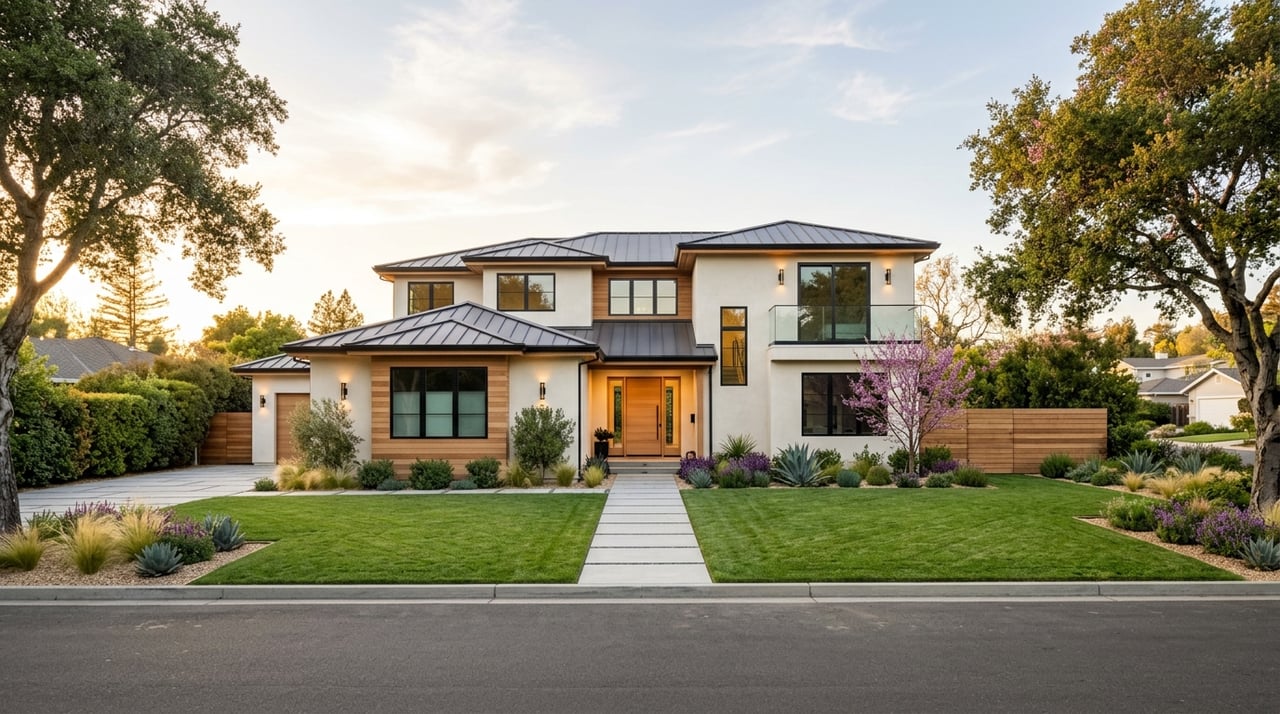
Fremont tends to make sense if you want a more traditional suburban housing mix, broader neighborhood options, and meaningful access to parks and trails. It can also appeal if you are comfortable with a commute tradeoff in exchange for more space or a different home type.
For some buyers, especially those comparing against premium South Bay cities, that is a smart and intentional trade. Fremont is not a fallback. It is a distinct housing choice.
If your daily work is deep in Santa Clara, Sunnyvale, Mountain View, or Cupertino, and your top priority is minimizing commute time, the South Bay core may be the better fit. The same is true if you want to be more directly connected to the Caltrain and VTA corridor.
In other words, Fremont is not simply a cheaper substitute for the South Bay. It offers a different balance of price, product type, commute pattern, and lifestyle.
If you are torn between Fremont and the South Bay, start with the three factors that affect your life most:
Once you answer those, the comparison gets clearer. The right choice is usually not the city with the lowest headline price. It is the one that best matches how you actually live.
If you want help comparing Fremont with Santa Clara County neighborhoods at a more detailed level, Tony Ngai can help you evaluate commute tradeoffs, home types, and neighborhood pricing with a local, data-driven lens.
Stay up to date on the latest real estate trends.
Get in Touch to Schedule a Consultation